




Safety Tips – November 13, 2026
How To Use Your Water Truck To Prevent Fire Emergencies Fire safety is critical on any job…
How To Use Your Water Truck To Prevent Fire Emergencies
Fire safety is critical on any job site. Project managers and construction owners have an obligation to ensure that fires are not only prevented, but that the team can properly handle them if one were to occur.
OSHA has several fire safety standards for construction sites. They cover everything, including equipment requirements, flammable materials, hot work, and ignition controls. However, despite how thorough OSHA’s standards are, it’s always beneficial to go above and beyond when it comes to safety. There is one piece of equipment that most construction sites use but may not realize it can be used for fire protection as well: water trucks.
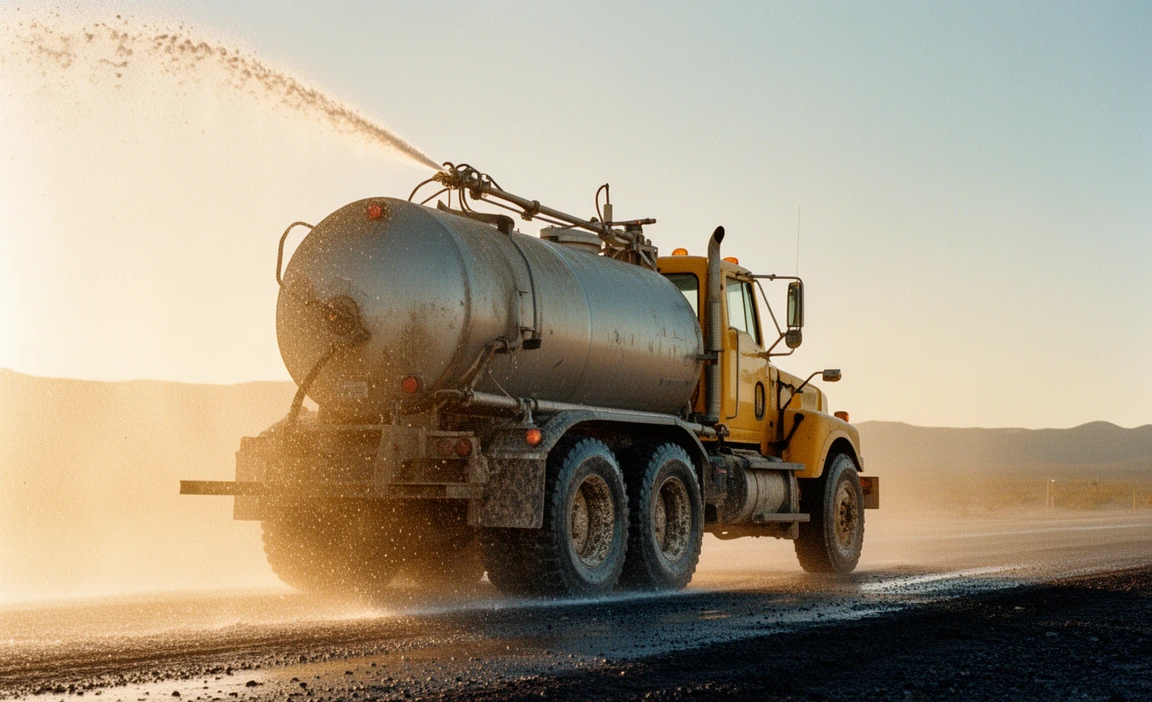
Most construction companies use water trucks to transport and distribute water for dust suppression and soil compaction. However, they can be incredibly useful for preventing fires, keeping them under control as authorities arrive, and even putting them out.
Most trucks carry between 2,000 and 5,000 gallons, more than enough to serve as a fire extinguisher in an emergency. In some rural areas, a water truck is the only source of pressurized water. Therefore, you need to make sure the truck is properly equipped to prevent and put out fires in an emergency.
Customize it properly
Most trucks already have front and rear sprayers, which can be helpful as is. However, you want to make sure that the truck also has a sprayer on both sides. This allows you to simply drive by an area with the truck, and water will spray out either side.
Side sprayers are user-friendly and operated via a switch in the cab. The sprayers can be used to prevent fires by wetting the ground. They can also be used to control and put out fires, if necessary. They are fairly affordable and not a big or complicated addition to the vehicle.
Make sure that the vehicle has high-pressure outlets connected to the main water pump. They can be installed on the sides, front, or rear depending on the truck configuration. They typically come in 1.5-inch and 2.5-inch connections. This helps ensure there is enough water pressure to saturate the ground and quickly put out potential fires.
Having a water cannon or high-pressure hose reel is also beneficial. They shoot farther with more pressure. However, the cannons alone can go for $10,000 to $20,000 before mounting and wiring. If it is affordable for the company, they make a great addition to put out potential fires. However, the side sprayers are only a few hundred dollars and work just fine.
Train the crew
It’s important to make sure that not only the water truck operator, but also the crew knows the truck isn’t just there to suppress dust. It should be used to prevent fires by wetting the ground and, if needed, managing them. Thankfully, water trucks are a straightforward piece of equipment.
Make sure everyone knows how to use the custom additions, such as the side sprayers or the water cannon. Sprayers are controlled by a switch inside the cab. The crew can drive the truck close to the fire and use the switch to control the water. Make sure there is an emergency shutoff switch, and that they know where it is and how to operate it in case they lose control of the water pressure.
Make sure your crews take the time to practice with the truck add-ons. A high-pressure sprayer or cannon can be difficult to control if you’ve never done it before. The last thing you want is for someone to use it for the first time during an emergency.
Establish a relationship with the fire department
Most importantly, if the project is in a more rural area, make sure the fire department is aware of what you’re doing, and the water sources you have. If you have a water truck, let them know. They can use it during emergencies.
Give them as much information as possible about the project and all of your water supplies. If the fire hydrants are not active, make sure to clearly mark them and notify the fire department. The last thing you want is for them to waste time in the middle of an emergency.
Meeting basic OSHA standards is essential, but managers have a duty to maximize safety measures, especially when beneficial equipment is already on the jobsite. By adding minor customizations to standard water trucks, training crews in emergency procedures, and coordinating with local first responders, you turn a dust suppressor into a first line of fire defense.
Cómo utilizar tu camión cisterna para prevenir emergencias por incendio
La seguridad contra incendios es fundamental en cualquier obra. Los gestores de proyectos y los propietarios de obras tienen la obligación de asegurarse de que los incendios no solo se previen, sino que el equipo pueda gestionarlos adecuadamente si llegara a producirse.
OSHA tiene varias normas de seguridad contra incendios para las obras. Cubren todo, incluyendo los requisitos de equipo, materiales inflamables, trabajos en caliente y controles de encendido. Sin embargo, a pesar de lo estrictas que son las normas de OSHA, siempre es beneficioso ir más allá en cuanto a seguridad. Hay un equipo que la mayoría de las obras usan pero que quizá no se den cuenta que también puede usarse para protección contra incendios: los camiones cisterna.
La mayoría de las empresas constructoras utilizan camiones cisterna para transportar y distribuir agua para supresión del polvo y compactación del suelo. Sin embargo, pueden ser increíblemente útiles para prevenir incendios, mantenerlos bajo control cuando llegan las autoridades e incluso apagarlos.
La mayoría de los camiones transportan entre 2.000 y 5.000 galones, más que suficiente para servir como extintor en una emergencia. En algunas zonas rurales, un camión cisterna es la única fuente de agua a presión. Por lo tanto, debes asegurarte de que el camión esté debidamente equipado para prevenir y apagar incendios en caso de emergencia.
Personalízalo correctamente
La mayoría de los camiones ya tienen pulverizadores delanteros y traseros, lo cual puede ser útil tal y como están. Sin embargo, debes asegurarte de que el camión también tenga un pulverizador en ambos lados. Esto te permite simplemente pasar por una zona donde está el camión, y el agua saldrá a ambos lados.
Los pulverizadores laterales son cómodos de usar y se operan mediante un interruptor en la cabina. Los pulverizadores pueden usarse para prevenir incendios mojando el suelo. También pueden usarse para controlar y apagar incendios, si es necesario. Son bastante asequibles y no suponen una adición grande o complicada al vehículo.
Asegúrate de que el vehículo tenga salidas de alta presión conectadas a la bomba principal de agua. Se pueden instalar en los laterales, delanteros o traseros según la configuración del camión. Normalmente vienen en conexiones de 1,5 y 2,5 pulgadas. Esto ayuda a garantizar que haya suficiente presión de agua para saturar el suelo y apagar rápidamente posibles incendios.
Tener un cañón de agua o un carrete de manguera de alta presión también es beneficioso. Dispara más lejos con más presión. Sin embargo, los cañones por sí solos pueden costar entre 10.000 y 20.000 dólares antes de montarse y cablearse. Si es asequible para la empresa, son una gran adición para apagar posibles incendios. Sin embargo, los pulverizadores laterales cuestan solo unos cientos de dólares y funcionan perfectamente.
Entrenar a la tripulación
Es importante asegurarse de que no solo el operador del camión cisterna, sino también el equipo, sepan que el camión no está ahí solo para suprimir el polvo. Debe usarse para prevenir incendios mojando el suelo y, si es necesario, gestionándolos. Por suerte, los camiones cisterna son un equipo sencillo.
Asegúrate de que todos sepan usar los accesorios personalizados, como los pulverizadores laterales o el cañón de agua. Los pulverizadores se controlan mediante un interruptor dentro de la cabina. El equipo puede conducir el camión cerca del incendio y usar el interruptor para controlar el agua. Asegúrate de que haya un interruptor de corte de emergencia y que sepan dónde está y cómo operarlo en caso de que pierdan el control de la presión del agua.
Asegúrate de que tus equipos se tomen el tiempo para practicar con los accesorios para camiones. Un pulverizador o cañón de alta presión puede ser difícil de controlar si nunca lo has hecho antes. Lo último que quieres es que alguien lo use por primera vez durante una emergencia.
Establecer una relación con el departamento de bomberos
Lo más importante es que, si el proyecto está en una zona más rural, asegúrate de que el departamento de bomberos sepa lo que haces y las fuentes de agua que tienes. Si tienes un camión cisterna, avísales. Pueden usarlo en caso de emergencia.
Dales toda la información posible sobre el proyecto y todos tus suministros de agua. Si las bocas de incendio no están activas, asegúrate de marcarlas claramente y avisar a los bomberos. Lo último que quieres es que pierdan tiempo en medio de una emergencia.
Cumplir con los estándares básicos de OSHA es esencial, pero los responsables tienen el deber de maximizar las medidas de seguridad, especialmente cuando ya hay equipos beneficiosos en el lugar de trabajo. Al añadir pequeñas personalizaciones a los camiones cisterna estándar, formar a los equipos en procedimientos de emergencia y coordinar con los primeros intervinientes locales, se convierte un supresor de polvo en una primera línea de defensa contra incendios.