




Safety Tips – November 27, 2026
Whipcheck Safety When working with high pressure and in low visibility situations, accidents can and do happen….
Whipcheck Safety
When working with high pressure and in low visibility situations, accidents can and do happen. Preventing injuries should be the top priority on every job site. Although it is encouraged to increase productivity, speed, and profit, in no way is it recommended that operator safety should ever be compromised.
ENSURE THAT ALL CONNECTION POINTS ARE WHIPCHECKED
If a blast, bull, or other hose connection point was to become disconnected accidentally, the high pressure in the hose would cause the ‘live’ end of the hose to whip or snap around and lash out at anything in its path. This can result in injury to blasting operators, including any bystanders. The out-of-control hose thrashes out indiscriminately in all directions, causing an extremely dangerous situation. This has happened in multiple blasting operations and has caused many very serious injuries, even death, to blasting personnel.
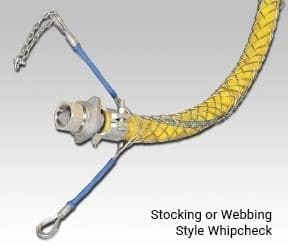
With Whipchecks fitted, especially the “Stocking” variety, the situation becomes much less volatile as the coupling’s movement becomes more restricted, which gives much more time for the operator to shut down the air supply when a connection fails.
WHIPCHECK TYPES
The traditional whipcheck has a single cable which, when installed properly, would semi-restrict the hose in the event of coupling failure. Due to the fact the hose is not firmly secured, it could and will still whip around and potentially cause harm to personnel standing close to the point of failure.
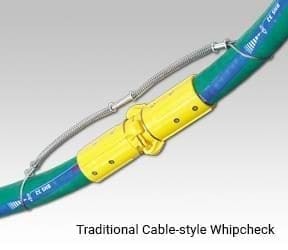
The safer option is the Stocking whipcheck which holds the hose securely and checks the hose whip more completely.
WHERE SHOULD WHIPCHECKS BE PLACED?
There are 4 minimum locations where whipchecks should be installed:
Air Compressor to Bull Hose
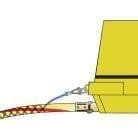
Inlet to Blast Machine
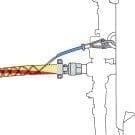
Inlet and Outlet Connections
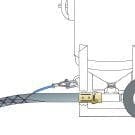
Connection Points Along the Hose
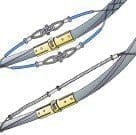
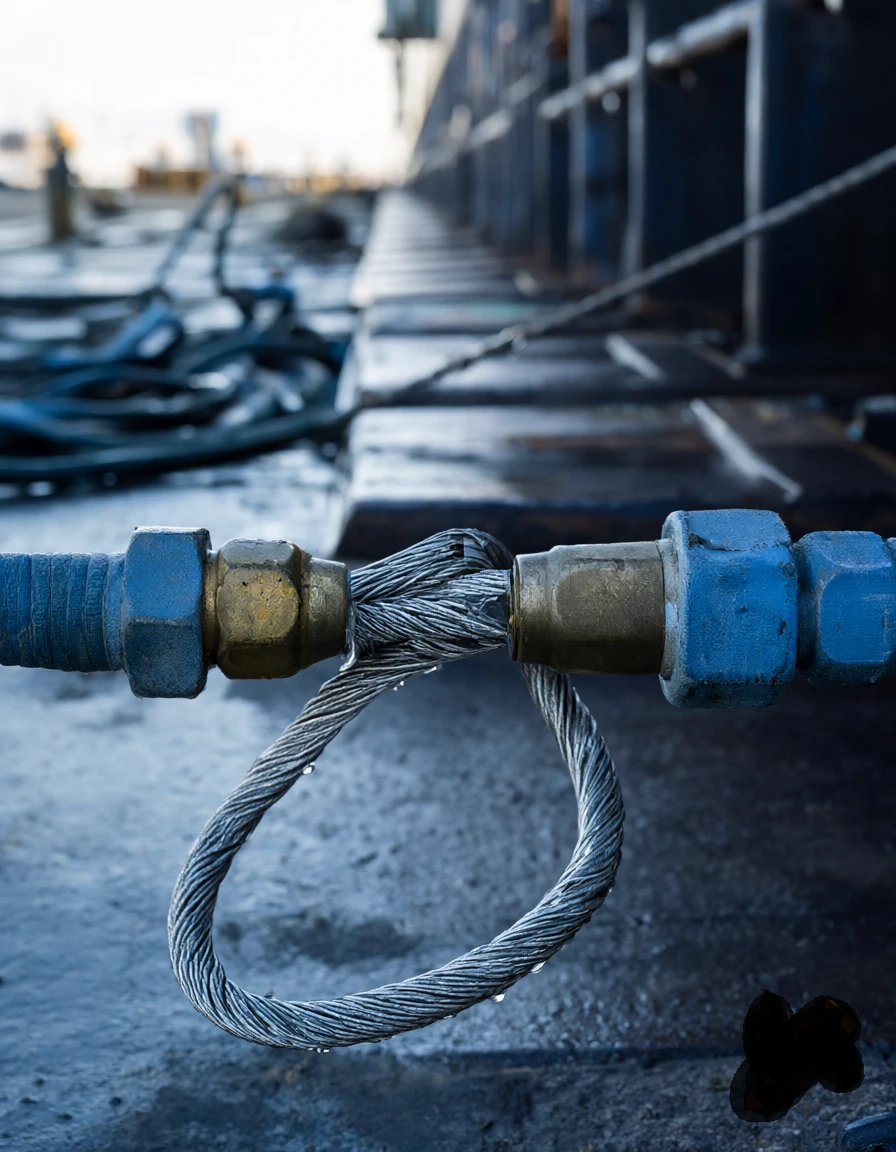
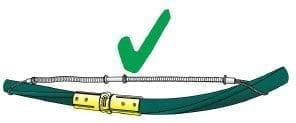
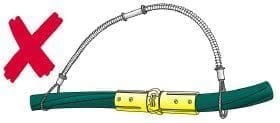
It is critical, regardless of what style in use, that the Whipcheck is installed correctly:
Whipcheck must be fully extended and flat along the hose.
Not looped or loose as shown.
Seguridad del Whipcheck
Cuando se trabaja con alta presión y en situaciones de baja visibilidad, los accidentes pueden ocurrir y de hecho ocurren. Prevenir lesiones debe ser la máxima prioridad en cualquier obra. Aunque se fomenta aumentar la productividad, la rapidez y el beneficio, en ningún caso se recomienda comprometer la seguridad del operador.
ASEGÚRATE DE QUE TODOS LOS PUNTOS DE CONEXIÓN ESTÉN REVISADOS CON LÁTIGO
Si un punto de conexión de la explosión, toro u otro punto de conexión de la manguera se desconectara accidentalmente, la alta presión en la manguera haría que el extremo ‘vivo’ de la manguera girara o se moviera bruscamente y atacara cualquier cosa que se interpusiera en su camino. Esto puede causar lesiones a los operadores de voladuras, incluidos los espectadores. La manguera fuera de control se lanza indiscriminadamente en todas direcciones, causando una situación extremadamente peligrosa. Esto ha ocurrido en múltiples operaciones de voladura y ha causado muchas lesiones muy graves, incluso la muerte, al personal que vola.
Con los Whipchecks instalados, especialmente los de tipo “Stocking”, la situación se vuelve mucho menos volátil a medida que el movimiento del acoplamiento se restringe, lo que da mucho más tiempo al operador para apagar el suministro de aire cuando falla una conexión.
TIPOS DE WHIP CHECK
El whipcheck tradicional tiene un solo cable que, al instalarse correctamente, restringiría parcialmente la manguera en caso de fallo del acoplamiento. Debido a que la manguera no está bien sujeta, podría y seguirá girando y potencialmente dañando a la persona que esté cerca del punto de fallo.
La opción más segura es el Stocking whipcheck, que sujeta la manguera con seguridad y revisa el látigo de la manguera de forma más completa.
¿DÓNDE DEBERÍAN COLOCARSE LOS WHIPCHECKS?
Hay 4 lugares mínimos donde se deben instalar los whipchecks:
Compresor de aire a manguera bull
De entrada a máquina de voladura
Conexiones de entrada y salida
Puntos de conexión a lo largo de la manguera
Es fundamental, independientemente del estilo que se use, que el Whipcheck se instale correctamente:
El whip debe estar completamente extendido y plano a lo largo de la manguera
No está en bucle ni suelto como se muestra.