





Safety Tips – October 2, 2026
Inspecting Your First aid Kit Why inspect your first aid cabinet? The purpose of inspecting your first…
Inspecting Your First aid Kit
Why inspect your first aid cabinet?
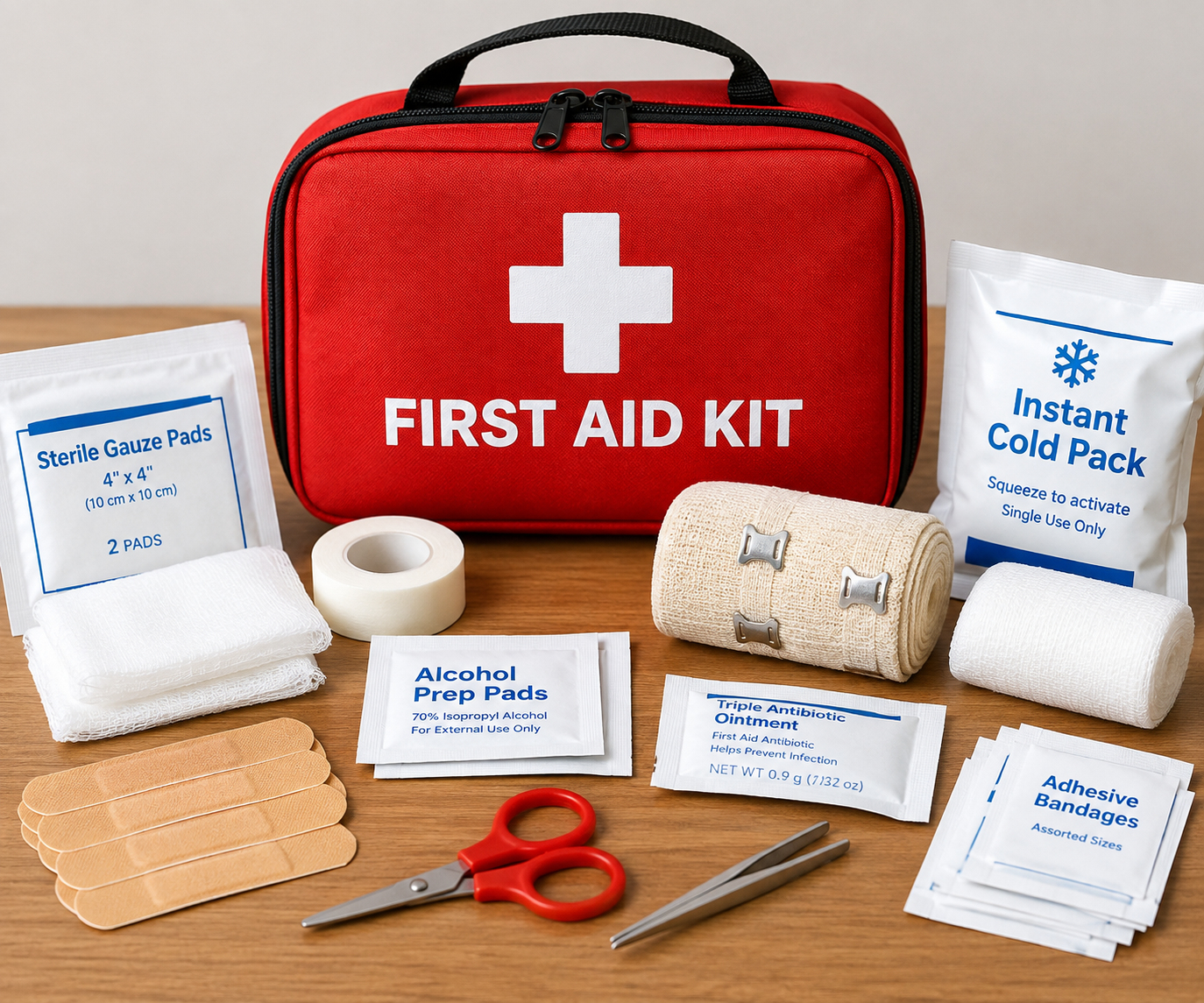
The purpose of inspecting your first aid kit is to organize, prepare for replenishment, and ensure everything is safe and ready to use. These steps refer to a standard 4-shelf industrial first aid cabinet, but the principles can be applied to any first aid kit, regardless of size or type.
Check for unsafe or damaged products
Check for damaged, soiled, dirty, or even partially used products. On a job site, all items should be single-use to prevent cross-contamination. That means a tube of ointment with a resealable cap should be considered contaminated after one use. Open bottles of eyewash or partially used ointment should be discarded. It’s best to stock your first aid cabinet with single-use packages of these products.
Check for expiration dates
Many of the items in a first aid kit have an expiration date, which is marked on the container or individual package. Items including sprays, ointments, wipes, medications, eyewash, and eye drops will all have an expiration. If the outer box does not show a date, be sure to check the product inside. Keep in mind that similar items may have different dates. When inspecting or replenishing your first aid kit, remember FIFO (first in, first out). Always put newer products behind the older ones so they will be used in order of expiration date. Be especially careful when inspecting the pouches inside the cabinet door.
Review and observe the usage and available inventory
As you check your supplies, pay attention to how much has been used. This will help you plan for the future and avoid running out of any particular item. Good observation may also help pinpoint the types of injuries that are occurring, which can identify areas for improvement to create a safer workplace.
Arrange and organize the product to its appropriate location in the cabinet
Consistency is key to managing and maintaining your supplies. It’s important to keep your cabinet organized so that when first aid is needed, your crew can easily find what they need in the same spot each time. Know where your supplies are supposed to be and move them back to their dedicated spot – including items in the door.
Remember these best practices
Foil blanket, tourniquet, and single-use hand sanitizer
- Inspect your first aid kit quarterly (if not monthly)
- Sanitize the cabinet as you perform inspections
- Post emergency care information on the outside of the box or cabinet, including:
- Site address
- Urgent care address/directions
- Phone numbers for Garco project manager, superintendent, safety, and quality control contacts
- Phone numbers for OSHA, WISHA/DOSH, EPA, and local fire/rescue
- List of first aid-qualified people
- According to ANSI/ISEA Z308.1-2021 – Workplace First Kits (not OSHA/WISHA):
- Type A must include a foil blanket
- Type B must include a military-style tourniquet and hand sanitizer
Inspeccionando tu botiquín
¿Por qué inspeccionar tu armario de primeros auxilios?
El propósito de inspeccionar tu botiquín es organizar, preparar el repuesto y asegurarse de que todo sea seguro y esté listo para usar. Estos pasos se refieren a un armario industrial estándar de primeros auxilios de 4 estantes, pero los principios pueden aplicarse a cualquier botiquín, independientemente del tamaño o el tipo.
Revisa si hay productos inseguros o dañados
Comprueba si hay productos dañados, sucios, sucios o incluso parcialmente usados. En una obra, todos los artículos deben ser de un solo uso para evitar la contaminación cruzada. Eso significa que un tubo de pomada con tapón resellable debe considerarse contaminado tras un solo uso. Se deben desechar los frascos abiertos de coluto ocular o ungüento parcialmente usado. Es mejor reponer tu gabinete de primeros auxilios con paquetes de un solo uso de estos productos.
Comprobar las fechas de caducidad
Muchos de los artículos de un botiquín tienen una fecha de caducidad, que está marcada en el envase o en el paquete individual. Artículos como sprays, pomadas, toallitas, medicamentos, enjuagues oculares y colirios tendrán caducidad. Si la caja exterior no muestra fecha, asegúrate de comprobar el producto en el interior. Ten en cuenta que artículos similares pueden tener fechas diferentes. Al inspeccionar o reponer tu botiquín, recuerda el FIFO (primero en entrar, primero en salir). Siempre coloca productos nuevos detrás de los antiguos para que se usen en orden de caducidad. Ten especial cuidado al inspeccionar las bolsas dentro de la puerta del armario.
Revisa y observa el uso y el inventario disponible
Mientras revisas tus materiales, presta atención a cuánto se ha consumido. Esto te ayudará a planificar el futuro y evitar quedarte sin ningún objeto en particular. Una buena observación también puede ayudar a identificar los tipos de lesiones que se están produciendo, lo que puede identificar áreas de mejora para crear un lugar de trabajo más seguro.
Coloca y organiza el producto en su lugar adecuado dentro del armario
La constancia es clave para gestionar y mantener tus suministros. Es importante mantener el armario organizado para que, cuando necesites primeros auxilios, tu equipo pueda encontrar fácilmente lo que necesita en el mismo lugar cada vez. Sabe dónde deben estar tus suministros y muévelos de vuelta a su lugar asignado, incluyendo los objetos en la puerta.
Recuerda estas mejores prácticas
Manta de aluminio, torniquete y gel desinfectante de un solo uso
- Revisa tu botiquín trimestralmente (si no mensualmente)
- Desinfecta el armario mientras haces las inspecciones
- Publica información sobre la atención de emergencia en el exterior de la caja o armario, incluyendo:
- Dirección del sitio
- Dirección/direcciones de urgencias
- Números de teléfono para el gestor de proyecto, superintendente, contactos de seguridad y control de calidad de Garco
- Números de teléfono de OSHA, WISHA/DOSH, EPA y bomberos/rescate local
- Lista de personas cualificadas en primeros auxilios
- Según ANSI/ISEA Z308.1-2021 – Kits de Primera Oficina (no OSHA/WISHA):
- El Tipo A debe incluir una manta de papel de aluminio
- El tipo B debe incluir un torniquete de estilo militar y gel desinfectante de manos